Language:
Time seems obvious—it flows, passes, and organizes our lives. In physics, however, it turns out that it is not a simple, universal “background” that works the same everywhere. This is best seen when we try to measure it really accurately. Modern atomic clocks can measure time with such precision that they would only be wrong by about one second after a time comparable to the age of the universe. With such accuracy, very counterintuitive things come to light: a slight change in altitude is enough for the difference in gravitational force to cause time to pass more slowly or more quickly. We are now able to measure such differences.
During the meeting, I will show how the world’s most accurate clocks work and why they have become one of the key tools of modern physics, as well as the foundation of the technologies we use every day. Thanks to them, it is possible to make very precise comparisons and tests of theories describing reality, including checking whether quantities considered to be fundamental constants are indeed constant. We will also ask ourselves questions about the concept of entropy, the direction of time, and the irreversibility of processes—which show that even in an area that we can measure extremely accurately, there is still much to discover.
Modern technologies are increasingly delving into the realm of individual atoms. When matter is cooled to temperatures close to absolute zero and almost completely isolated from its surroundings, the world of quantum mechanics ceases to be an exotic theory and becomes a natural description of reality. Under such conditions, classical intuition fails, and the behavior of atoms begins to follow rules completely different from those we know from everyday experience. It is this change in perspective that opens up new, unprecedented possibilities for the use of matter and the development of technology.
In this lecture, I will explain what really lies behind the idea of “taming” the atom and what working with individual quantum objects looks like. I will show what optical atomic clocks, quantum sensors, and the quantum computers being developed today have in common, and why working at this level requires a completely different approach than classical technology. I will explain how different fields of physics and technology come together in a single experiment to create the complex systems necessary to work at the level of individual atoms, and where the fundamental limitations imposed by physics itself arise.
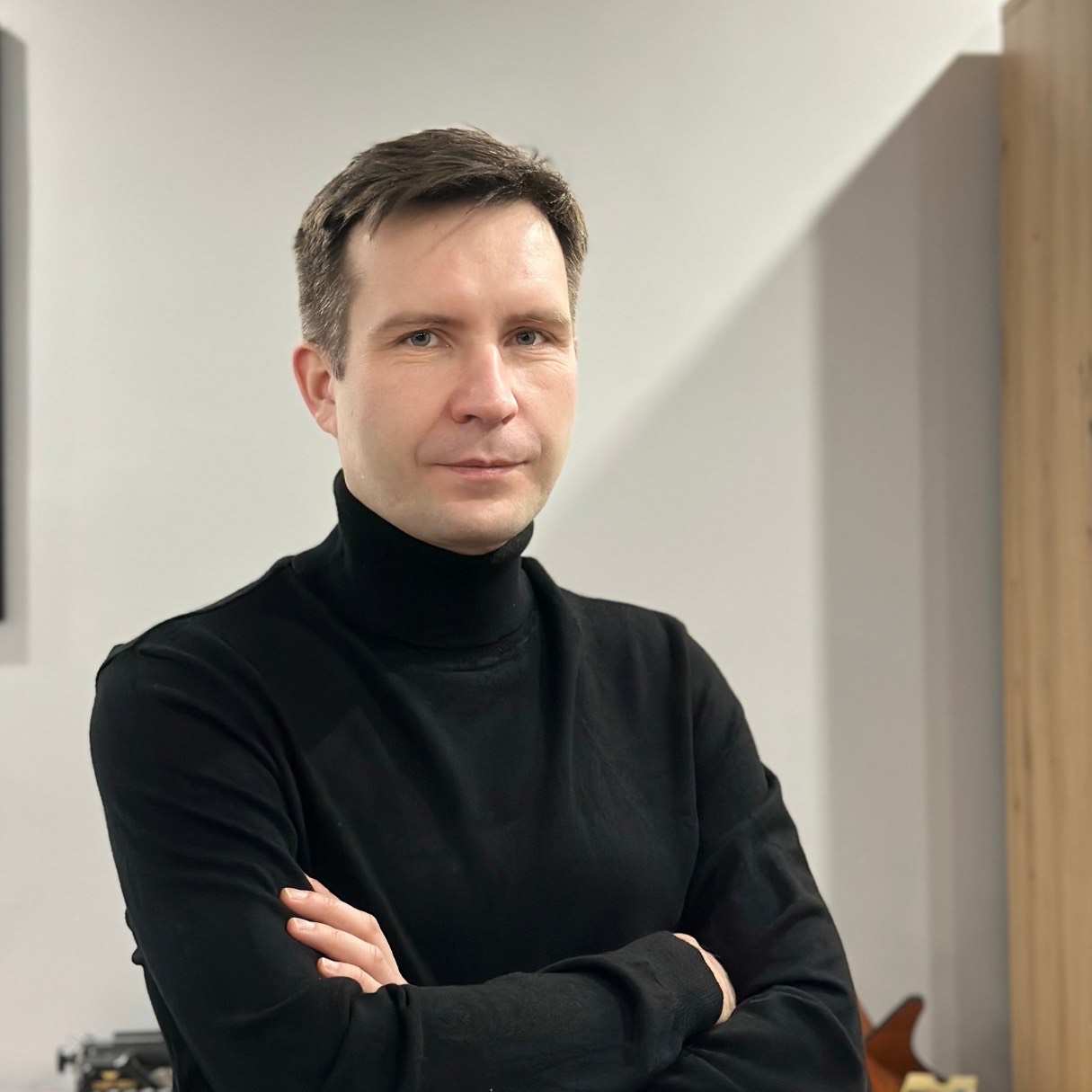
Piotr Morzyński – PhD in physics, lecturer and researcher specializing in atomic and optical physics, utilizing fundamental phenomena of quantum mechanics, and the development of optical atomic clocks – one of the most accurate measuring devices ever created. He is the co-creator of the first and only optical atomic clocks in Poland, operating at the National Laboratory of Atomic, Molecular and Optical Physics in Toruń at the Nicolaus Copernicus University.
He works mainly experimentally, conducting research in laboratories in Poland and abroad and collaborating with international research teams. He is involved in numerous projects related to precise time and frequency measurements. His research work combines fundamental quantum physics with the development of modern technologies. In his presentations, he shows physics “from the inside” – as a field based on real experiments, precise measurements, and fundamental questions about the nature of reality.